
The Evening Plate for Better Sleep (Food First, Supplements Second)
Leafy greens, seeds, and eggs bring magnesium and glycine to the table. Before you reach for a capsule, reach for dinner.

In The Journal and the supplement series I write about magnesium and glycine for sleep and calm. The evidence for the supplements is real but modest. So here is a principle I hold to: food first, supplement second. This simple evening plate brings the same nutrients to the table in their natural form.
Why make this
Built around the nutrients that support calm and sleep, magnesium and glycine, in food form.
A light, protein-rich evening meal that sits comfortably before bed.
Fast and flexible, fifteen minutes, and endlessly adaptable.
The food-first version of the sleep supplements everyone is selling.
When to eat this
Evening, ideally a couple of hours before bed. It is deliberately light and protein-forward rather than heavy, so it supports winding down rather than sitting heavily while you try to sleep. This is the one recipe here designed specifically for the end of the day.
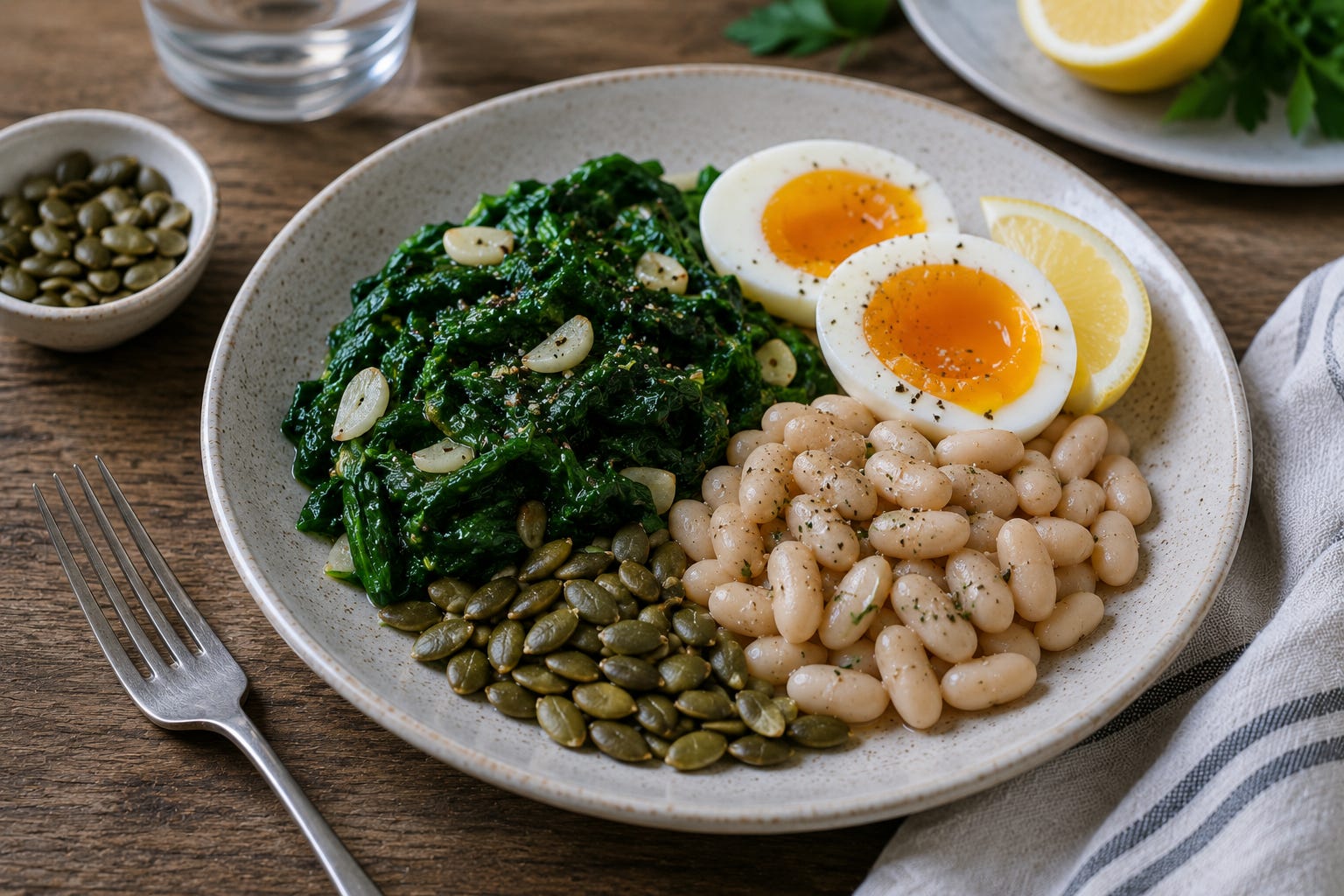
Greens, Eggs, and Seeds Evening Plate
Serves 2. 15 minutes.
Ingredients
200 g leafy greens (spinach, chard, or kale), washed
1 tablespoon rapeseed (canola) oil
2 cloves garlic, sliced
4 eggs
2 tablespoons pumpkin seeds, toasted
1 can (400 g) white beans or lentils, drained and warmed
Salt, pepper, a squeeze of lemon
Method
Warm the rapeseed oil, add the garlic for 30 seconds, then the greens, and cook until just wilted. Season and squeeze over a little lemon.
In the same or a second pan, fry or poach the eggs to your liking.
Plate the warmed beans, the greens, and the eggs. Scatter the toasted pumpkin seeds over the top.
Make it your own (US-friendly)
Greens: any leafy green. Frozen spinach works when fresh is short.
Protein: swap the eggs for fish or leftover salmon.
Seeds: pumpkin seeds are the magnesium star, but any seeds add minerals.
The science behind it
Magnesium is involved in many processes, including those that regulate sleep and the stress response, and many people run low. Leafy greens, pumpkin seeds, and legumes are among the best food sources. In supplement form, magnesium has a modest, real signal: a meta-analysis found it reduced the time to fall asleep by around 17 minutes, though the researchers rated the evidence quality low [1]. That modest picture is exactly why I prefer to start with food, where magnesium comes packaged with fibre and other nutrients.
Glycine, the amino acid with a small but real signal for sleep quality, is found in protein-rich foods including eggs, fish, and the collagen in a good broth. In studies, 3 grams before bed improved subjective sleep quality, likely by nudging down core body temperature, one of the signals that initiates sleep [2]. You will not hit a supplement dose from dinner, but building your evening meal around these foods supports the same systems.
The point is not to medicate with dinner. It is to build the evening meal around whole foods that naturally carry these nutrients, so a supplement, if you use one at all, tops up a good foundation rather than doing all the work.
A note before you cook
This is a light, nourishing evening plate built around magnesium-rich and protein-rich foods. It supports a calmer evening as part of good eating. It is not a sleeping pill, and not a substitute for the real levers of sleep: your routine, your light, your stress, and how your day winds down. Food first.
Tell me what to cook next. Would you like a wind-down evening drink to go with this, something warm and calming before bed? Reply and I will send one.
You may also like


If you would like all of my Plate recipes gathered into printable seasonal collections with meal plans and shopping lists, linked below:
Dr. Susanna Søberg, PhD
References
[1] Mah J, Pitre T. Oral magnesium supplementation for insomnia in older adults: a Systematic Review & Meta-Analysis. BMC Complementary Medicine and Therapies. 2021;21(1):125. doi:10.1186/s12906-021-03297-z
[2] Yamadera W, Inagawa K, Chiba S, Bannai M, Takahashi M, Nakayama K. Glycine ingestion improves subjective sleep quality in human volunteers, correlating with polysomnographic changes. Sleep and Biological Rhythms. 2007;5(2):126-131. doi:10.1111/j.1479-8425.2007.00262.x