
The Truth About Foods That “Activate Brown Fat” (And a Warming Dish That Helps)
Chili can nudge your metabolism through brown fat. I study this tissue, so let me tell you how small that nudge really is, and give you a genuinely good dish anyway.

Brown fat is my field. My published research is about how it behaves. So when I see food sold as a way to “activate brown fat and burn fat,” I want to give you the real version, because it is more useful than the hype.
Why make this
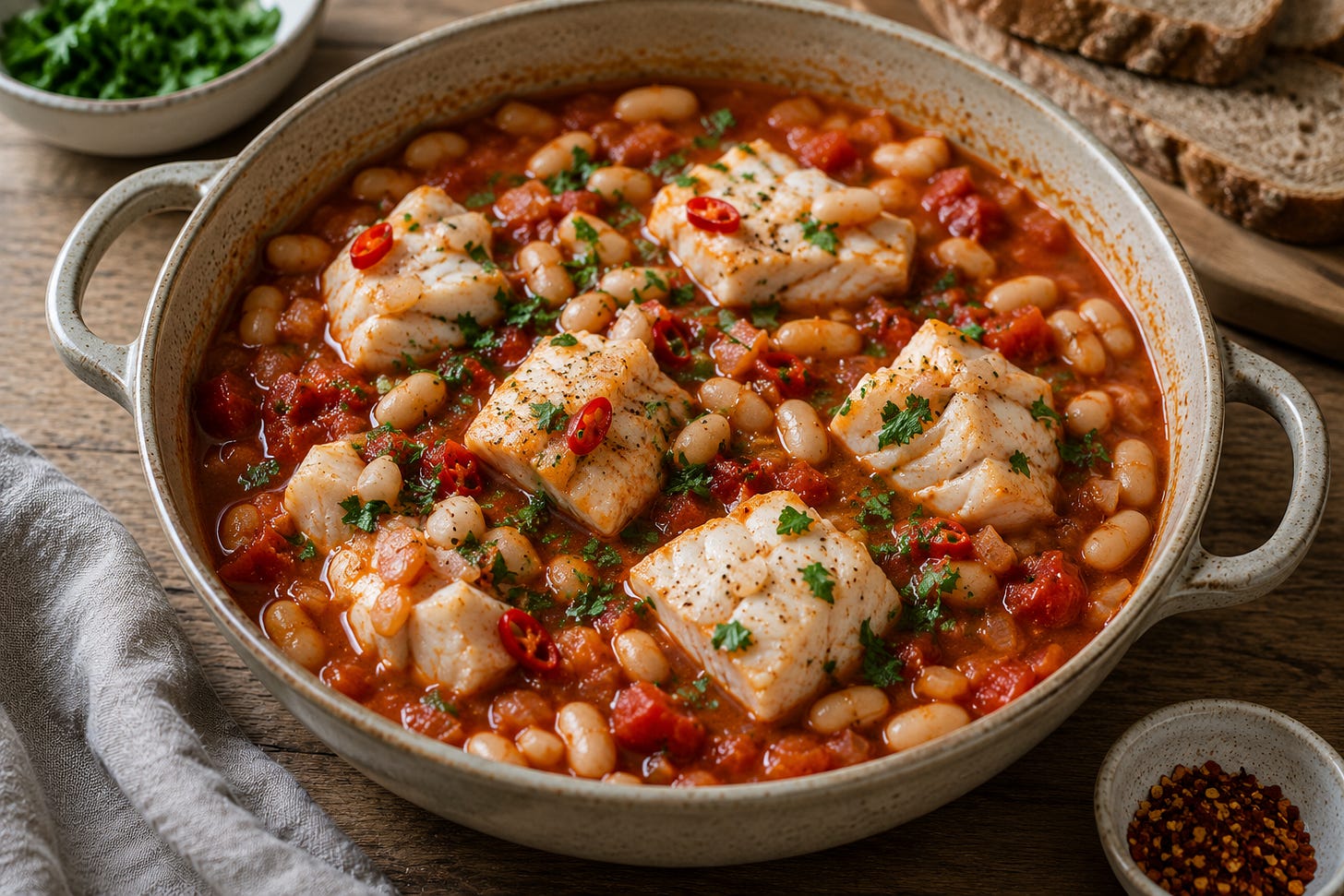
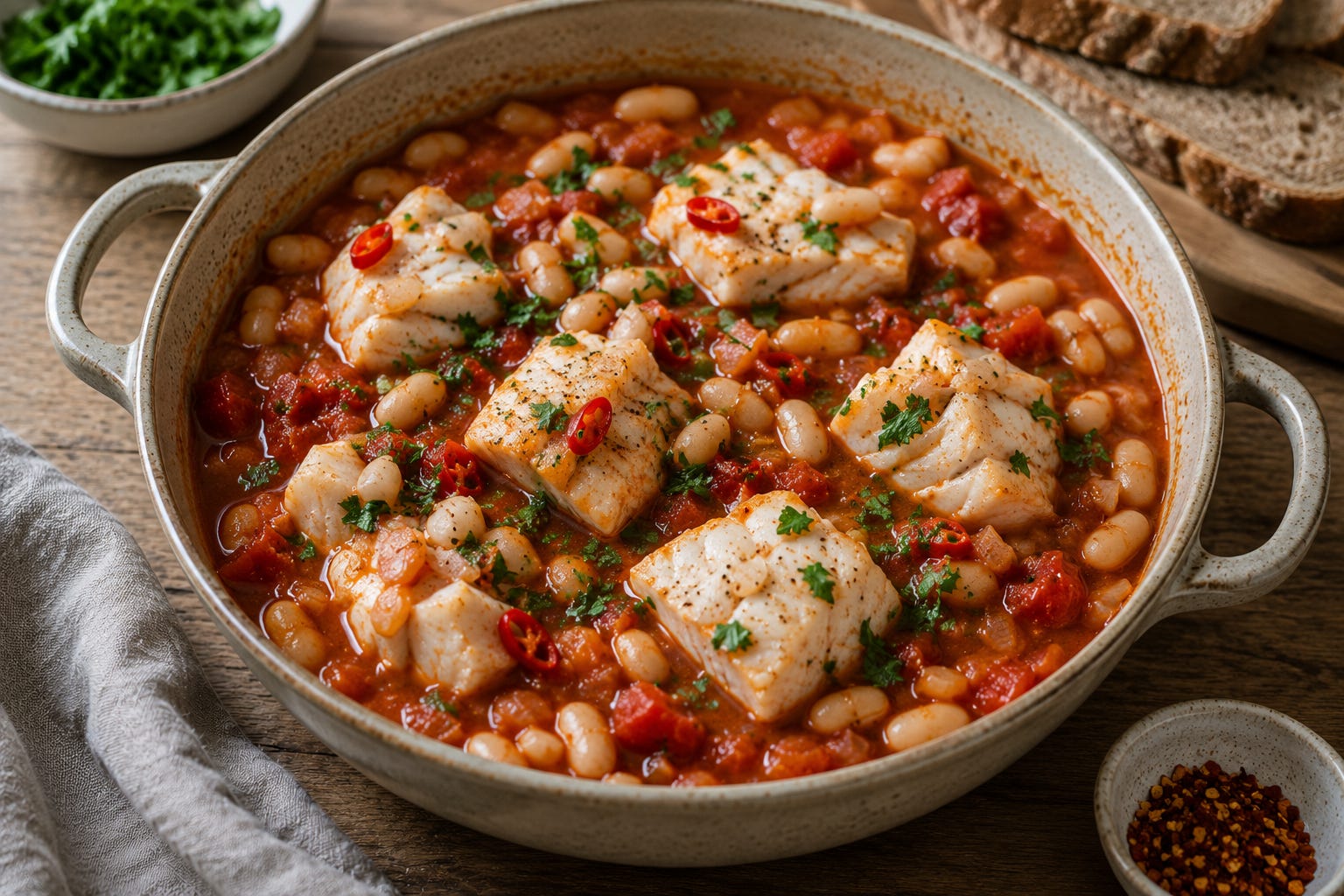
A warming, genuinely nourishing dinner. Protein-rich fish, fibre-rich beans, and vegetables in one warming pot.
A small, real thermogenic nudge from chili, described plainly, not oversold.
Beans that lower LDL cholesterol at about one serving a day [1].
A myth dismantled by someone who studies it, so you stop wasting money on “fat-burning” food claims.
When to eat this
A warming dinner, best on a cold evening. If you pair your week with actual cold exposure, which is the real brown-fat lever, a warming, spiced dinner afterward is a pleasant complement. It is filling without being heavy, so it sits well in the evening.
Warming Chili and White Bean Fish Pot
Serves 2. Prep 10 minutes. Cook 20 minutes.
Ingredients
2 fillets of white or oily fish (cod, pollock, or salmon), about 150 g each
1 tablespoon rapeseed (canola) oil
1 onion, chopped
2 cloves garlic, chopped
1 fresh red chili, finely chopped (or ½ teaspoon chili flakes)
1 teaspoon paprika
1 can (400 g) chopped tomatoes
1 can (400 g) white beans, drained
Salt, pepper, and a handful of parsley
Method
Warm the rapeseed oil in a deep pan. Soften the onion 5 minutes, then add garlic, chili, and paprika for 1 minute until fragrant.
Add the chopped tomatoes and white beans. Season and simmer 10 minutes until thickened.
Nestle the fish into the sauce, cover, and simmer gently 6 to 8 minutes until it flakes easily.
Scatter with parsley. Serve with rye bread or the new potatoes from the salmon recipe.
Make it your own (US-friendly)
Fish: any firm white fish or salmon. Frozen works well.
Chili: adjust to your heat tolerance. Warmth and flavour, not pain.
Beans: cannellini, butter beans, or chickpeas all work.
The science behind it
Brown fat, unlike ordinary white fat, burns energy to produce heat. That is why it is interesting. But the thing that reliably activates it is cold, not food. This is the core of my own research: cold exposure is the strong, consistent lever for brown fat, and I write about it in detail in The Søberg Journal.
Food is a much smaller lever. But not nothing. Chili contains capsaicin and its gentler relatives, capsinoids. In a careful study, ingesting capsinoids produced a slight but significant increase in energy expenditure, but only in people who already had active brown fat, and not in those without it [2]. The mechanism overlaps with the cold pathway; it nudges the same sympathetic, heat-producing system.
So read it plainly. The effect is real, it is small, and it works best in people whose brown fat is already active, which tends to mean people exposed to cold. Chili will not melt fat off you. It gives a modest thermogenic nudge, most meaningfully alongside the real lever, cold. The beans, meanwhile, do measurable work: about one serving of pulses a day significantly lowers LDL cholesterol [1].
I would rather give you a genuinely delicious warming dish than sell you a “fat-burning meal” that does not exist.
A note before you cook
This is a warming, protein-rich, fibre-rich dish with a gentle thermogenic nudge from the chili. It is good for you because of the fish, the beans, and the vegetables, not because it is a fat-burning trick. If you want to actually engage your brown fat, the lever is cold. The chili is a small, pleasant bonus.
Tell me what to cook next. Would you like me to write the companion to this, the actual cold practice that genuinely engages brown fat, as a Journal piece? Reply and tell me.
You may also like
From The Journal: Does Cold Water Actually Help You Lose Weight? My Scientific Answer
The Root Vegetable and Lentil Traybake (recipe) [drop link]
If you would like all of my Plate recipes gathered into printable seasonal collections with meal plans and shopping lists, see below links:
Dr. Susanna Søberg, PhD
References
[1] Ha V, Sievenpiper JL, de Souza RJ, et al. Effect of dietary pulse intake on established therapeutic lipid targets for cardiovascular risk reduction: a systematic review and meta-analysis of randomized controlled trials. CMAJ. 2014;186(8):E252-E262. doi:10.1503/cmaj.131727
[2] Yoneshiro T, Aita S, Kawai Y, Iwanaga T, Saito M. Nonpungent capsaicin analogs (capsinoids) increase energy expenditure through the activation of brown adipose tissue in humans. American Journal of Clinical Nutrition. 2012;95(4):845-850. doi:10.3945/ajcn.111.018606