

🧬 The Smart Supplement Guide: What to Take, When to Take It, and What Not to Mix
Mini-series on supplements: No 1

Why Supplements Matter (But Timing & Pairing Matter More)
I feel like this is such a big topic and there is so much confusion on what, when and how much to supplement. I want to help you get this a bit clearer with this article being a first in a series coming the next few months.
Most people think of supplements as a “nutritional safety net.” But in reality, the efficacy and safety of supplements depend not just on what you take, but when and with what you take them.
Scientific evidence shows that bioavailability, nutrient competition, and enzyme interactions can drastically change how vitamins work inside your body. In some cases, taking two popular supplements together can cancel out benefits—or worse, create harmful imbalances.
Let’s unpack what science actually says.
The Essential Five: What Most Adults Benefit From
1. Vitamin D3 + K2: The Bone-Immune Duo
Why take it: Vitamin D3 regulates calcium absorption; K2 directs that calcium into your bones instead of arteries.
Science: Studies show that co-supplementation enhances bone density and vascular health.
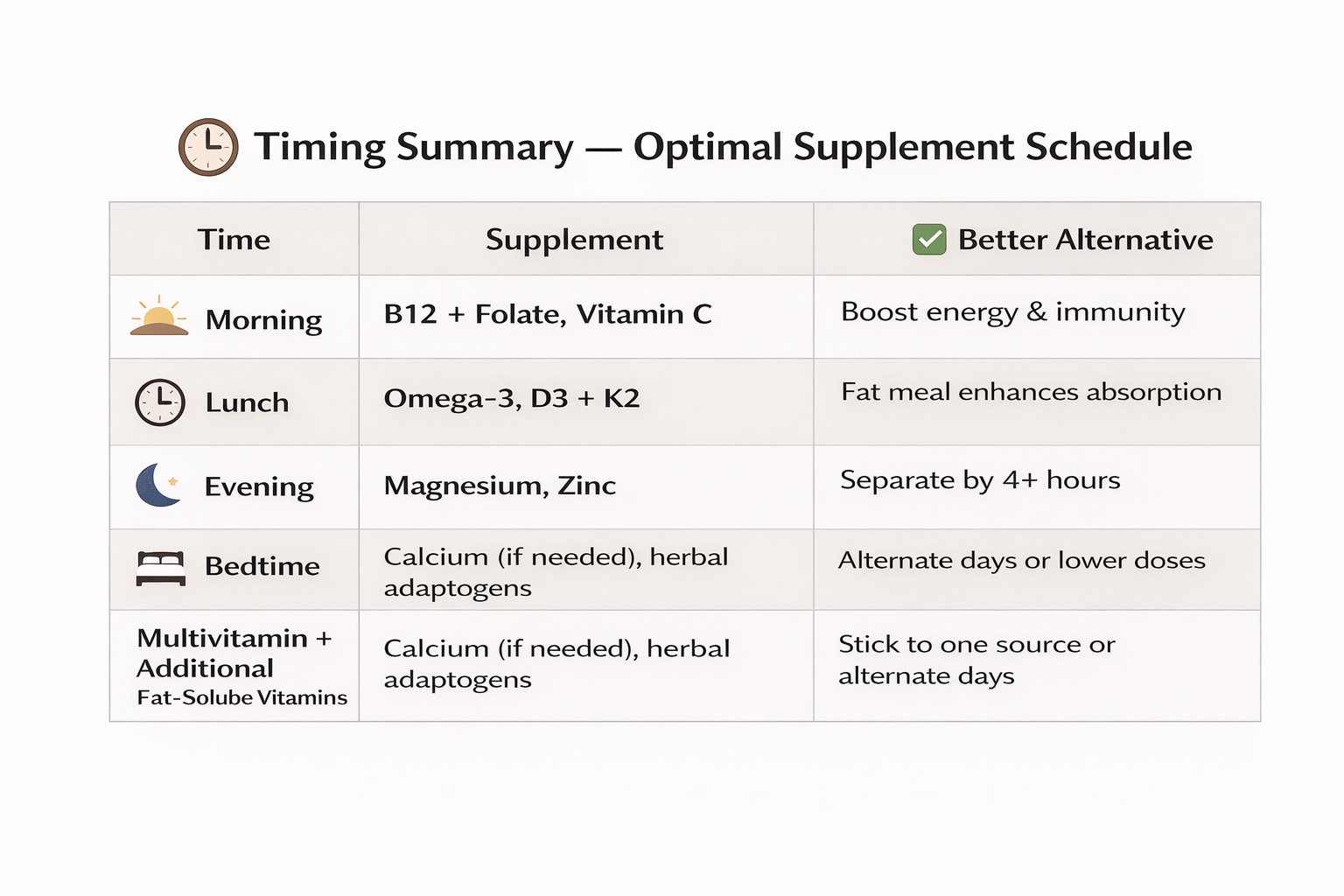
When: Take with your largest meal containing fat (improves absorption up to 50%).
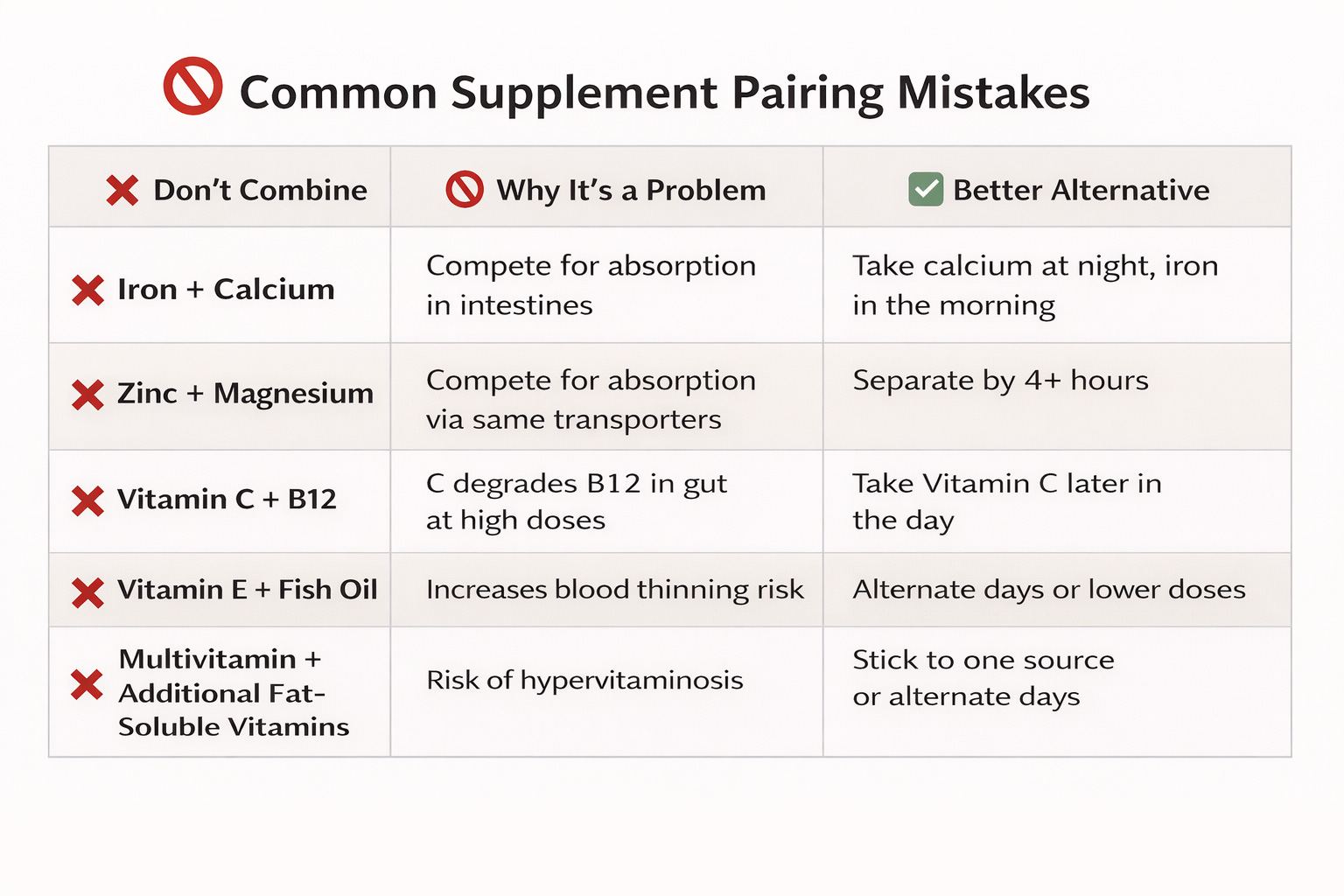
Do not mix with: High-dose Vitamin A or E at the same time — both are fat-soluble and can compete for uptake.
2. Magnesium: The Underrated Master Mineral
Why take it: Involved in over 300 enzymatic reactions, including muscle, nerve, and sleep regulation.
Form matters: Magnesium glycinate (for calm/sleep), citrate (for digestion), malate (for energy).
When: Evening is best — it supports melatonin synthesis and may enhance sleep quality.
Don’t mix with: High-dose zinc (>25 mg) — they compete for absorption in the gut.
Magnesium deficiency is linked to insulin resistance, cardiovascular disease, and poor sleep regulation.
3. Omega-3 Fatty Acids (EPA/DHA): The Inflammation Balancer
Why take it: Supports brain, heart, and joint health by reducing chronic inflammation.
Science: Meta-analyses confirm omega-3 intake reduces cardiovascular events and depressive symptoms.
When: With meals containing fat, ideally breakfast or lunch.
Avoid combining with: High-dose vitamin E unless medically indicated — both are blood thinners in high concentrations.
4. Vitamin B12 + Folate: The Energy & Methylation Team
Why take it: Essential for red blood cell production, DNA synthesis, and nervous system health.
When: Morning — helps with energy metabolism.
Form matters: Methylated forms (methylcobalamin + methylfolate) are better absorbed.
Do not combine with: Large doses of Vitamin C at the same time — may degrade B12 absorption when co-ingested.
5. Zinc + Quercetin: The Immunity Stack
Why take it: Zinc is critical for immune cell function; quercetin helps zinc enter cells (acting as an “ionophore”).
When: With food, but not with calcium or magnesium.
Science: Zinc supports T-cell activity, while quercetin shows antiviral and anti-inflammatory potential (Derosa et al., 2021, Frontiers in Immunology).
Avoid: Co-ingestion with iron supplements — they inhibit each other’s absorption.
🧩 Key Takeaways
Timing matters — fat-soluble vitamins (A, D, E, K) go best with meals containing fat.
Avoid nutrient competition — minerals like iron, zinc, and calcium compete for absorption.
Be cautious with “stacking” — more isn’t better; synergistic combinations outperform megadoses.
Consistency > intensity — regular, balanced supplementation outperforms sporadic overuse.
Conclusion
Supplements can elevate your health or undermine it depending on how intelligently you use them. The key is not taking more supplements (which I think I see a lot.) — it’s taking what is necessary and not to compensate for a poor lifestyle or stress.
Science supports synergy: Vitamin D3 with K2, Zinc with Quercetin, B12 with Folate. But it also warns of interference — calcium vs. iron, Vitamin C vs. B12.
Follow evidence-based timing, prioritize bioavailability, and always remember: supplements support a good diet; they don’t replace it.
Dr. Susanna Søberg
Metabolic Scientist & Founder, Thermalist Method®